Johannes Gees
Concept artist working across music, laser installations, digital art and painting since 1980.
Empathy — New Album Selected Works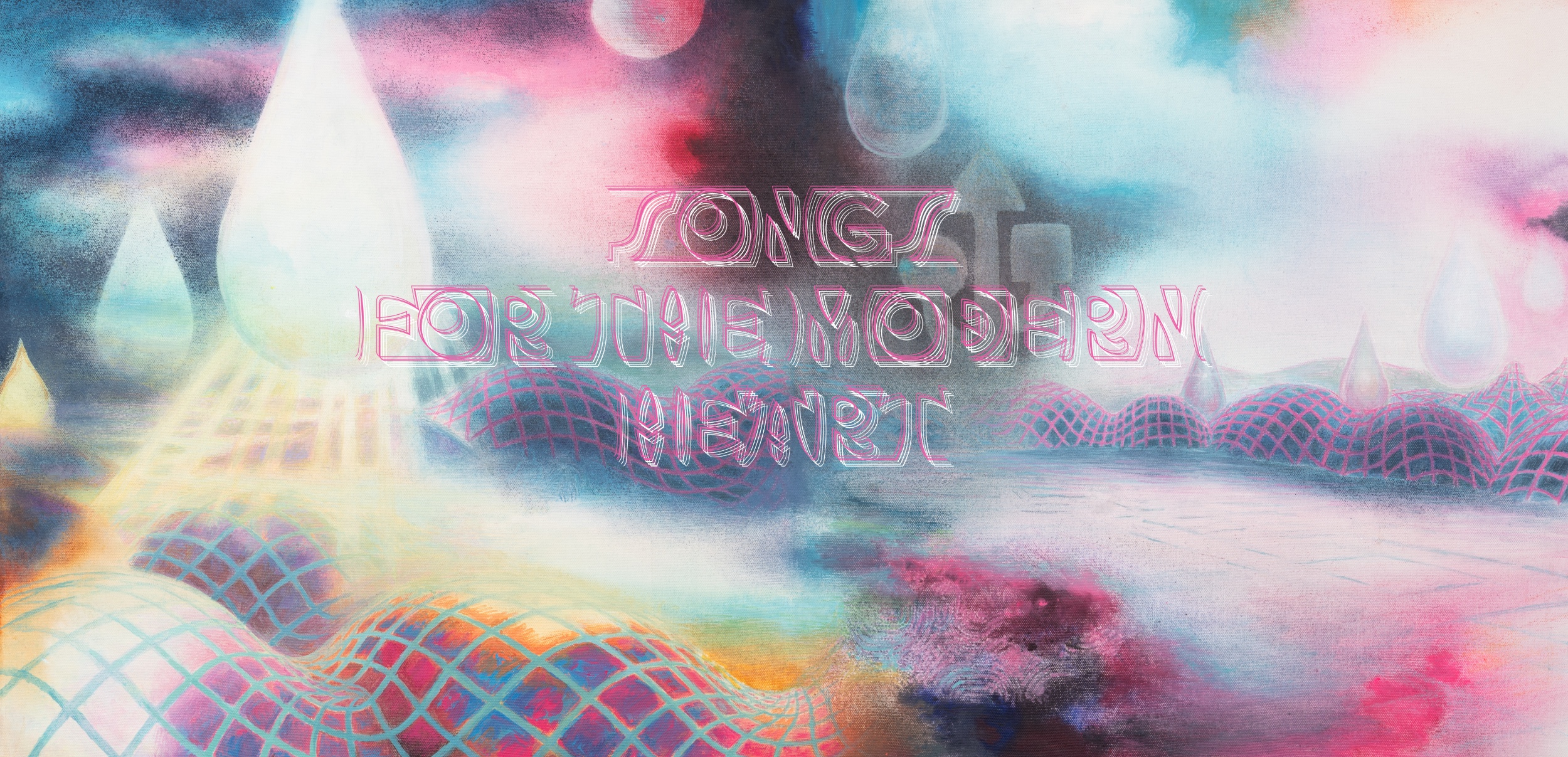
Concept artist working across music, laser installations, digital art and painting since 1980.
Empathy — New Album Selected Works
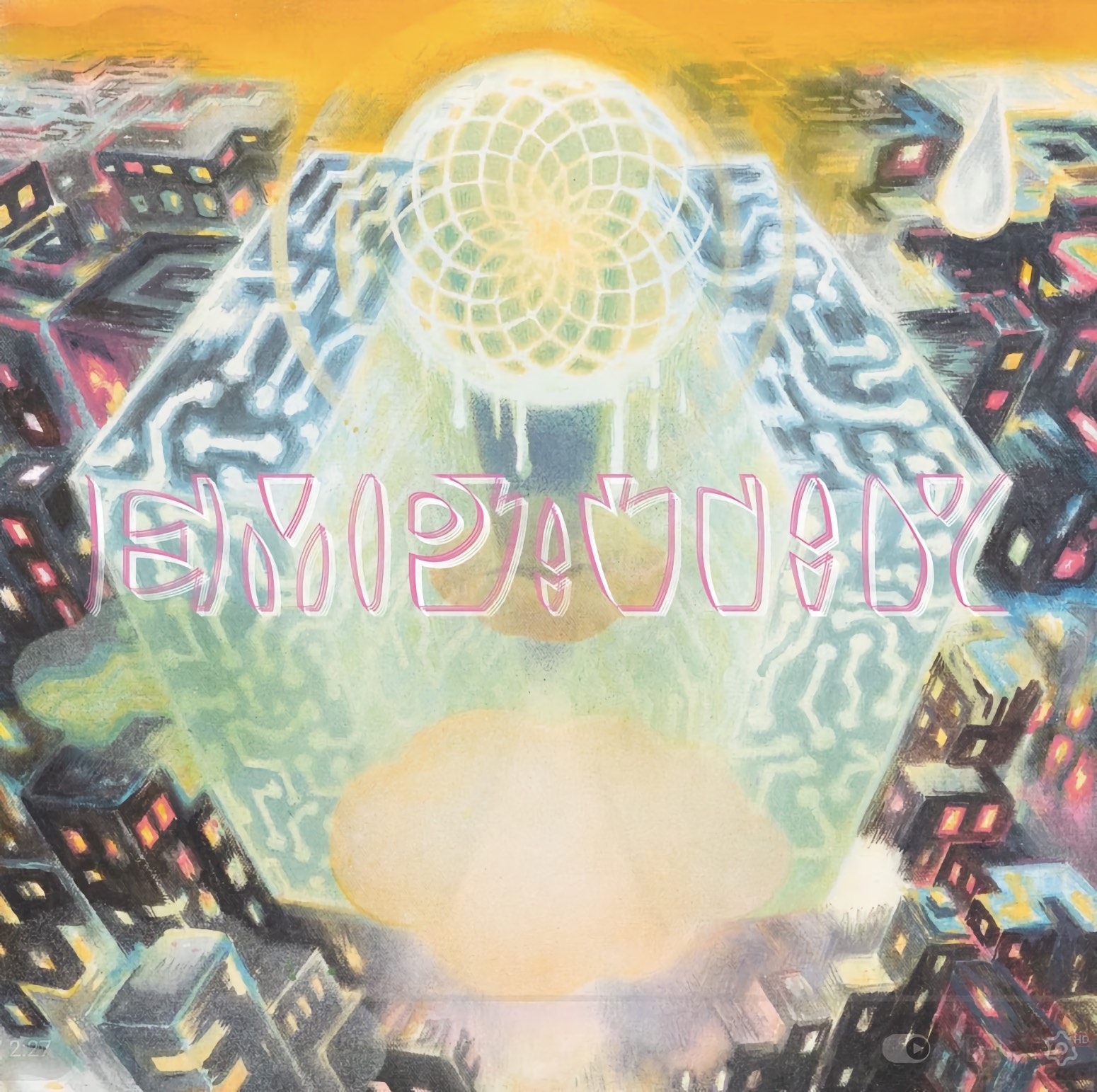
This vinyl collection presents a cycle of songs by Swiss artist and musician Johannes Gees. The songs traverse the emotional and existential landscapes of contemporary life, blending personal vulnerability with reflections on technology, alienation, and longing. Created between 2024 and 2026 in close and intensive collaboration with AI, the songs are also an exploration of the possibilities that arise when human and machine work together in the artistic process — one of the central questions surrounding the theme of Empathy itself.
The lyrics move from intimate scenes of everyday despair ("Domestic Despair") to and into surreal, almost dystopian territories ("Fomo Prompter", "Wo die Nacht wohnt").
Gees' writing is marked by stark simplicity and repetition, creating a sense of both immediacy and universality. The recurring motifs — holes to hide in, blue nights, rivers of tears — evoke a longing for escape and comfort in a world that often feels overwhelming.
Several songs, such as "Our Lives – Not Our Lives" and "Lament Of The Lover Bot", explicitly engage with the blurred boundaries between human and machine, self and system. Here, the lyrics reflect on digital existence, artificial intelligence, and the search for meaning in algorithmic realities. The interplay of English and German in "Wo die Nacht weint" further underscores the hybrid, border-crossing nature of Gees' work.
Throughout, the collection balances poetic introspection with social commentary, echoing Gees' broader artistic practice, which often fuses digital innovation with conceptual depth. The result is a body of work that is at once deeply personal and unmistakably contemporary — a lyrical exploration of what it means to feel, to yearn, and to be human (or almost human) in the 21st century.
A cycle of 14 songs traversing the emotional and existential landscapes of contemporary life, blending personal vulnerability with reflections on technology, alienation, and longing. The lyrics move from intimate scenes of everyday despair ("Domestic Despair") to the ache of lost love and memory, and into surreal, almost dystopian territories ("Fomo Prompter", "Wo die Nacht wohnt").
Several songs — "Our Lives – Not Our Lives" and "Lament Of The Loverbot" — explicitly engage with the blurred boundaries between human and machine, self and system. The collection balances poetic introspection with social commentary, echoing Gees' broader artistic practice. A lyrical exploration of what it means to feel, to yearn, and to be human (or almost human) in the 21st century.
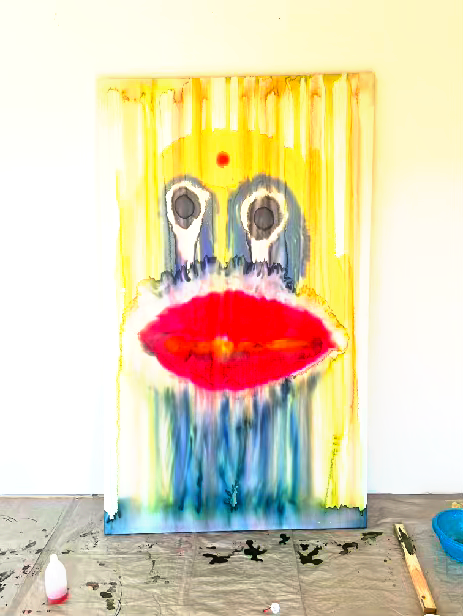
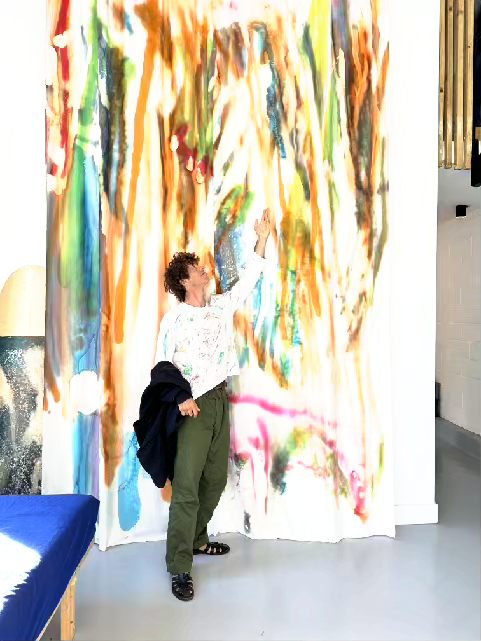
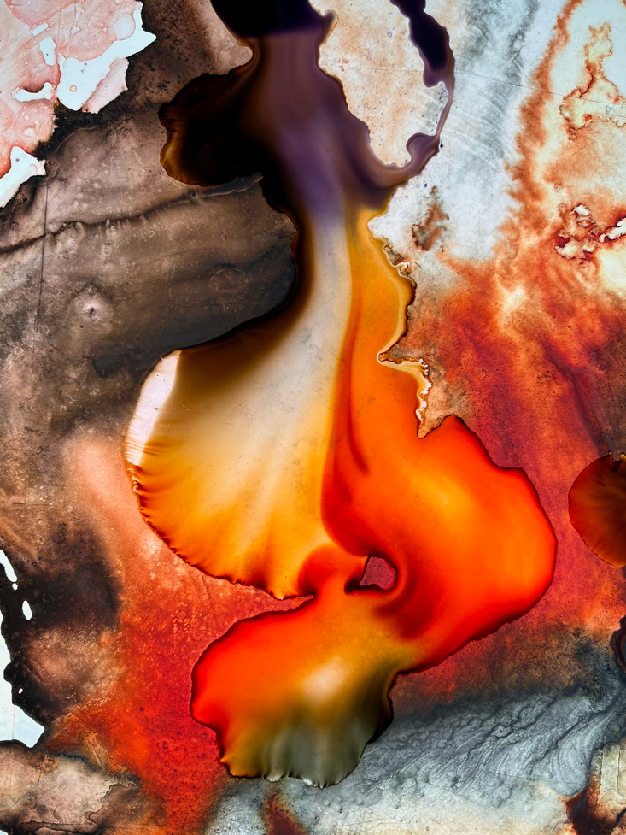
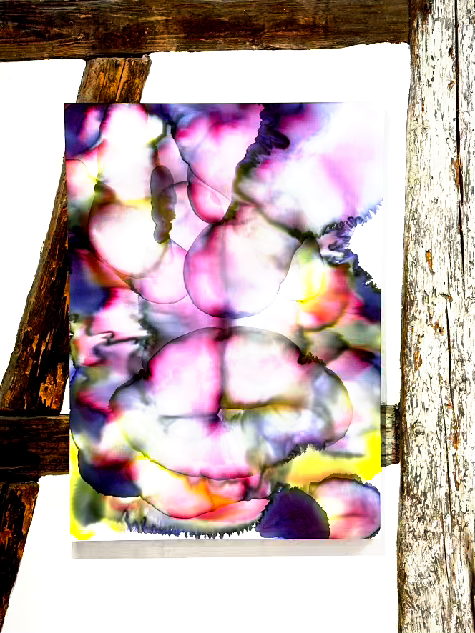
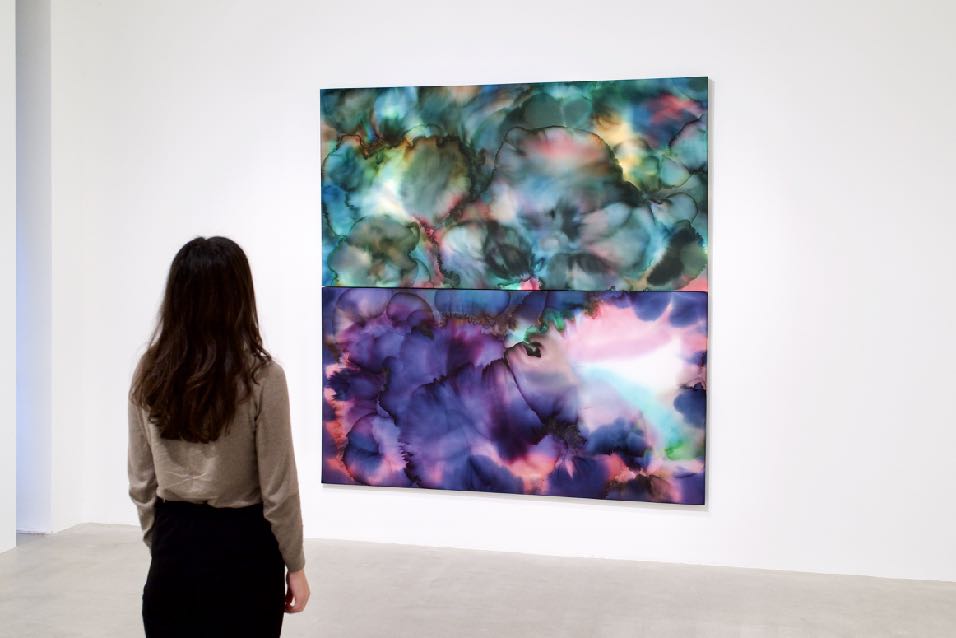
A sustained body of painting using Procion fiber-reactive dyes — a material associated with textile dyeing — applied to cotton, canvas, and acrylic surfaces. The works range from large-scale studio pieces (500×300 cm, 2024) to smaller framed works (120×200 cm, 2025) and the Drippings series (Procion colors on acrylic table top, digital photography, 60×80 cm, 2023).
The technique produces unpredictable flows and bleeds, suspending the painter between intention and material accident. Exhibited at Haus zur Glocke, Zurich (2023) and Galerie Laleh June, Basel (2019–2020).
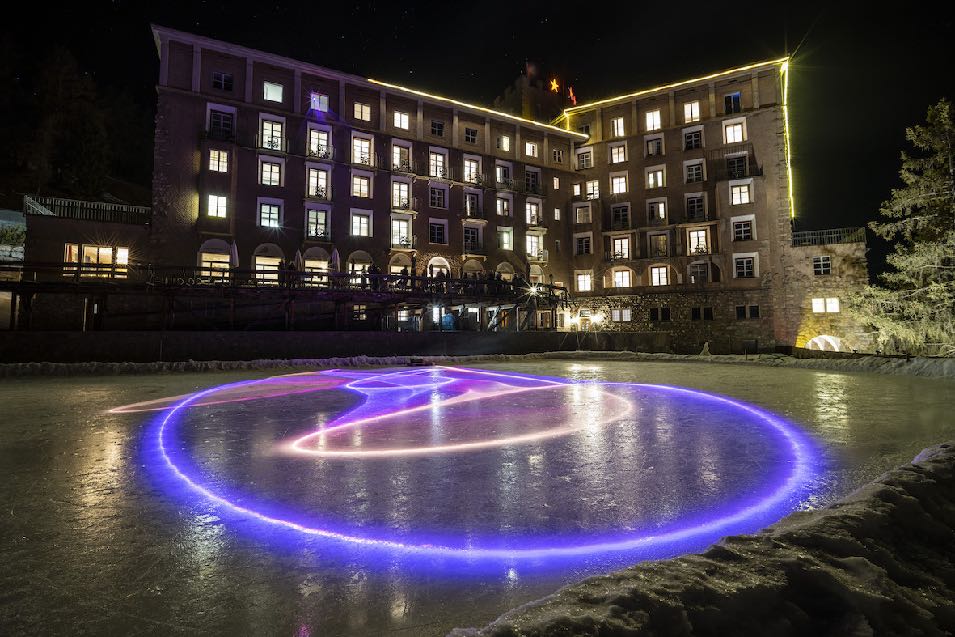
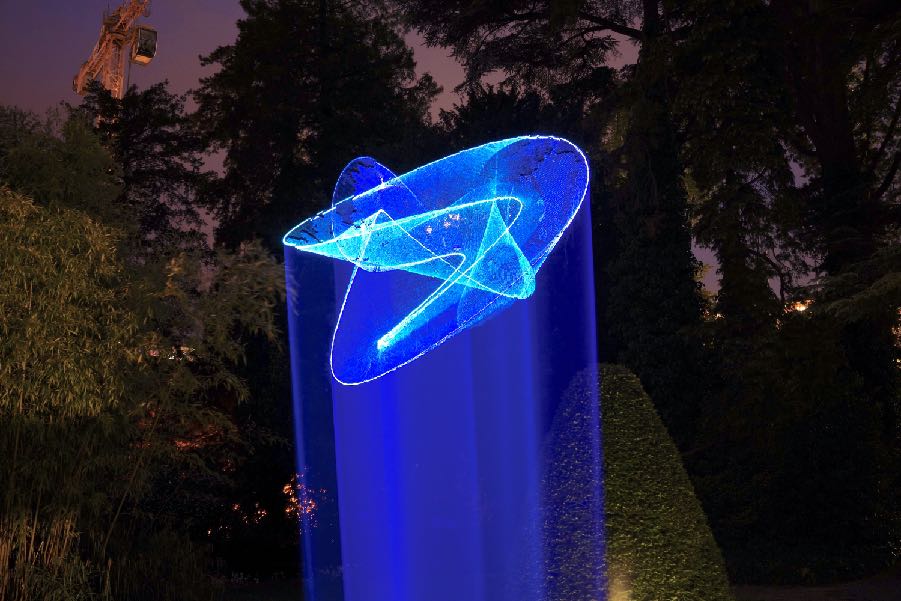
Laser projection during Engadin Art Talks at Hotel Castell, Zuoz, and at Tankkeller, Zurich. Alongside the projections, the NFT transaction hashes of kleee02 tokens were used to generate unique laser patterns, which were then exposed onto silk as cyanotypes — 1/1 works ca. 100×100 cm each.
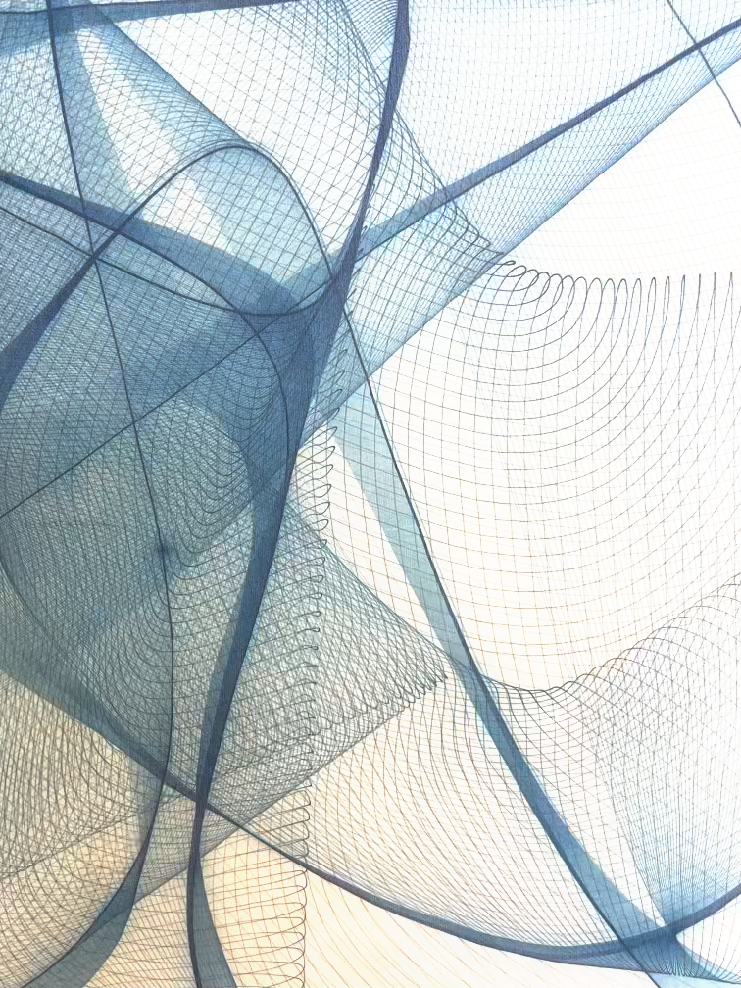
kleee02 is a contemporary, blockchain-inspired take on conceptual art. Described in a smart contract on the Ethereum blockchain (minted April 10, 2019), the piece allows anyone to participate by acquiring a unique kleee02 token. Each token's transaction hash serves as the variable in the kleee02 algorithm, generating a unique animation per strict rules embedded in the smart contract.
The name references Paul Klee's quote "a line is a dot that goes for a walk" — which describes, avant la lettre, how a laser works. By following the smart contract rules, other artists and coders are able to create further representations: digital prints, laser projections, videos.
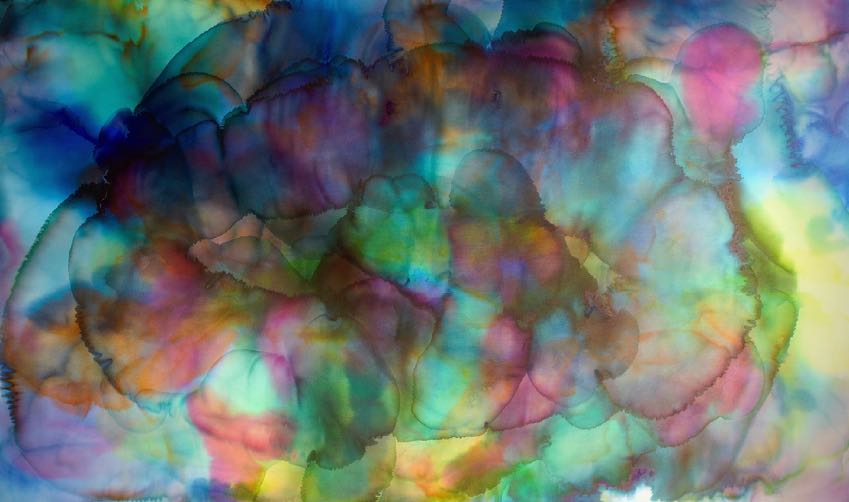
The first NFT minted by Johannes Gees. The work deals with the question of tokenization of artworks — not only the transition from analog to digital unique piece, but the question of the original itself: is it the painted image that exists in analog space (before destruction)? Is it the digital image that receives wider reach via social media?
The finished painting is thrown into the sea and "washed" during a performance filmed as a proof of destruction. The analog original disappears, replaced by a blockchain-certified, digitally unique piece with a blockchain address controlled by the owner of the private key. Certified on the Bitcoin blockchain at block 0000000000000000001f7cb45083bb2765d7a8f642310cfc3546cda98581c840, January 29, 2019, 13:03:04 UTC.
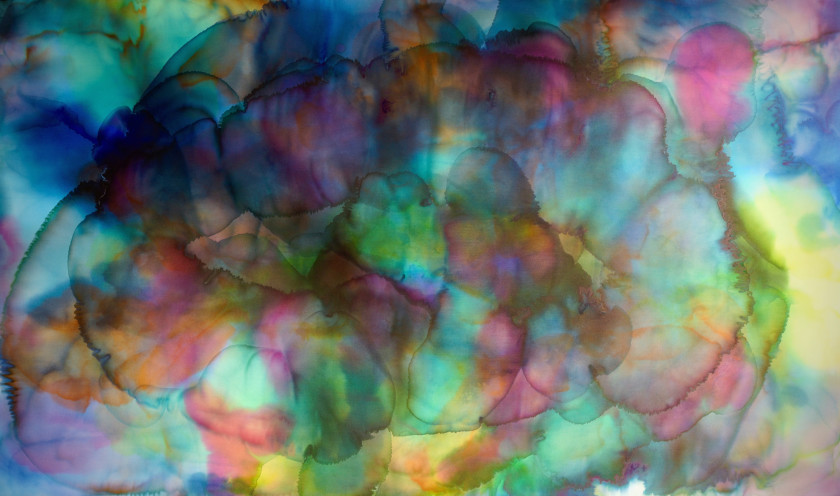
A collaborative painting exhibition with Cris Faria. Large-scale dripped canvases produced through an exchange between two practices, shown at Galerie Laleh June, Basel, December 14, 2019 – February 29, 2020.
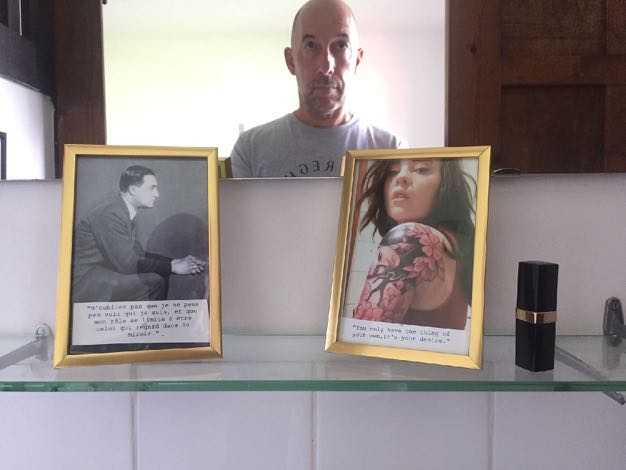
An exploration of two figures: the French Dadaist Jacques Rigaut and the American surfing legend Miki Dora. The stage is Hôtel Marienia in the Basque Guéthary, where artists and surfers have come and gone for over a hundred years — Man Ray, Miki Dora, Paul Klee, Wassily Kandinsky.
"dorarigautruc" imagines a spiritual affinity between the two enigmatic figures. As their synthesis, the art figure "KIM DORA" emerges — appearing as the author of a Dadaist sound poem and in the body of (real) Nynny Haaholm, who wears a tattoo of Jacques Rigaut. Created during a residency at Maison Marienia, Guéthary, July–October 2018.
An off-chain generative art piece developed for permanent installation in the garden of a collector in Zurich. kleee01 applies the platform's algorithmic rules to produce laser patterns in physical space, operating outside the blockchain while anticipating the logic of kleee02. The name references Paul Klee's "a line is a dot that goes for a walk."
The work begins with a simple question: what did Alfred Stieglitz see on that day in April 1917, in his studio, when he photographed Marcel Duchamp's "Fountain" — the work that would become the 20th century's most influential artwork?
After months of research, Gees identified that the background of Stieglitz's photograph is not a wallpaper, as commonly assumed, but Marsden Hartley's painting "Warriors" — which bears striking formal resemblances to "Fountain." Without doubt, Stieglitz contextualised and reframed the readymade as proposed by Duchamp, even before the public had a chance to see it.
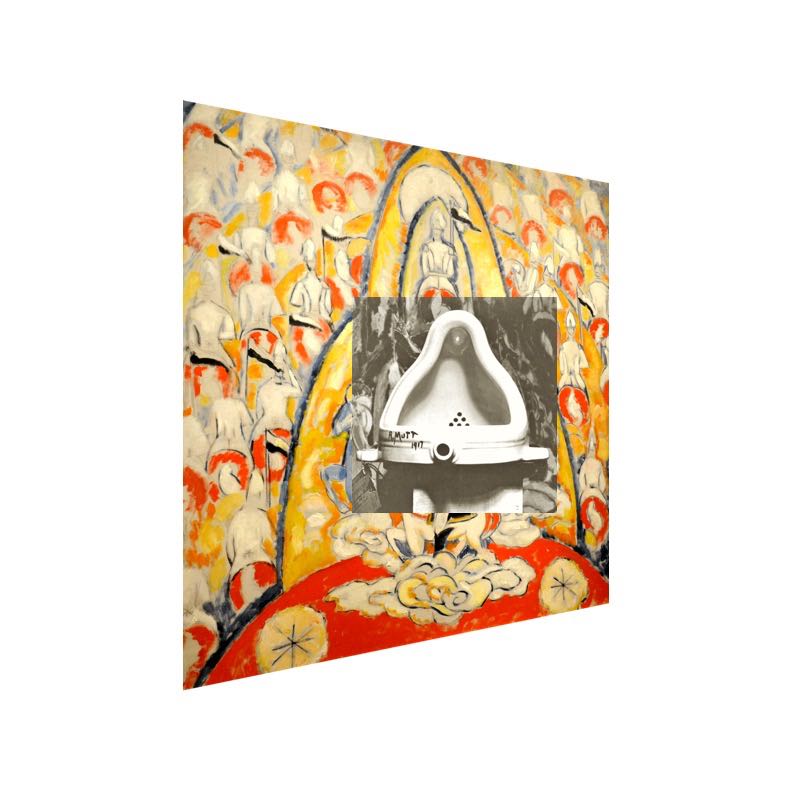
Performance work presented at Cabaret Voltaire, Zurich (with Director Adrian Notz), Palazzo Trevisan, Venice (2015, 2016), and as part of the Swiss Pavilion's Salon Suisse programme at the Venice Biennale.
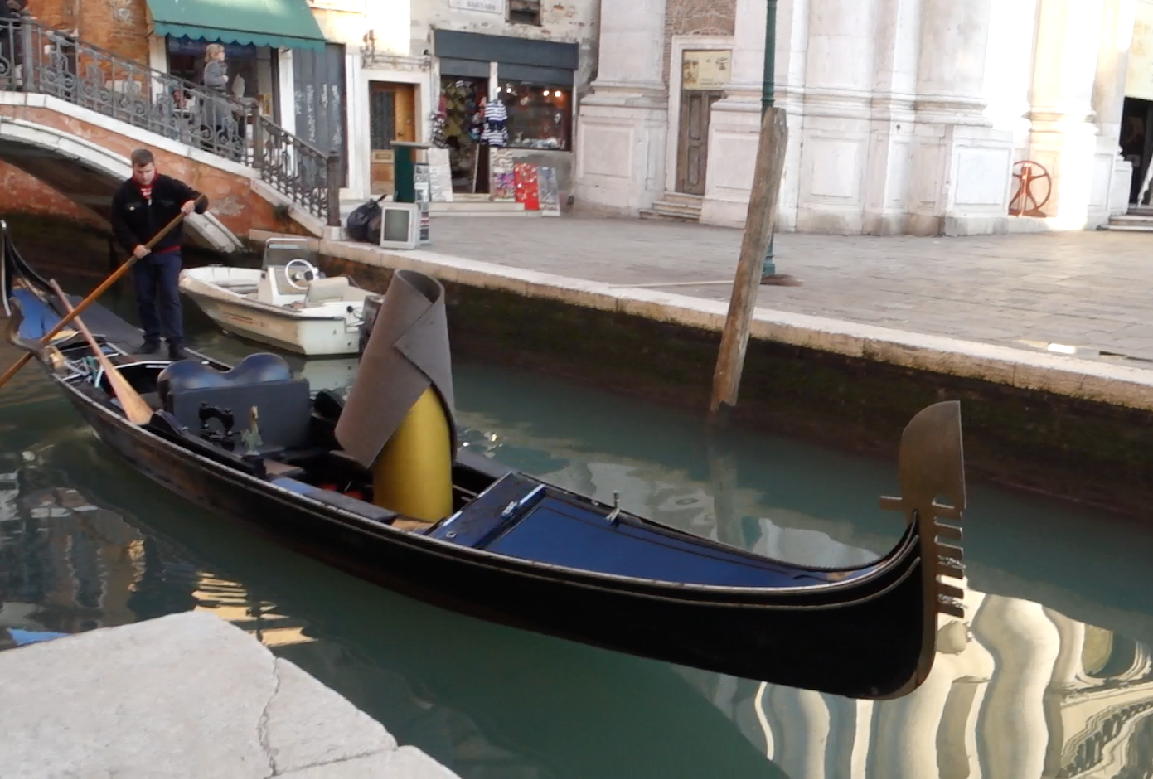
Co-founded wemakeit.com, the crowdfunding platform that became market leader in Switzerland and Austria. An instance of applying collaborative and participatory thinking — central to Gees' artistic practice — to institutional and economic structures.
Final Fantasy toured as readymade across Switzerland: La Rada, Lugano; Galerie Luciano Fasciati, Chur; Kunstraum Kreuzlingen; Volta Art Fair, Basel; Frauenfeld (2009). Le jardin des mots perdus was presented at Evento, Bordeaux, October 2009.

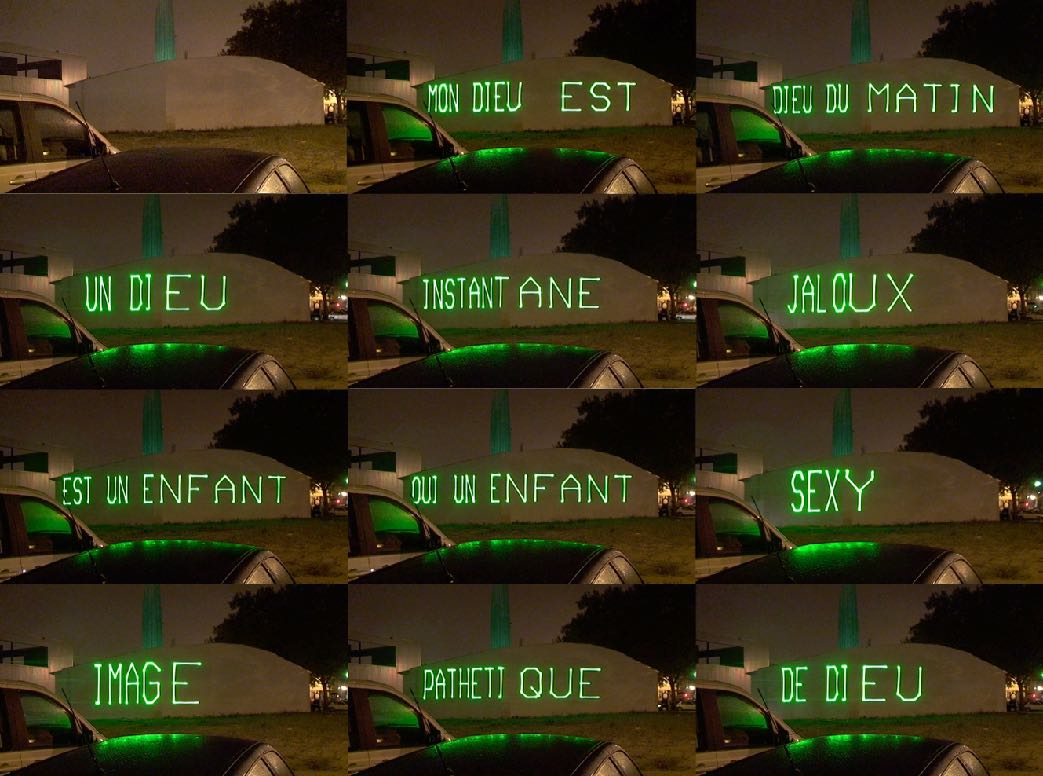
A sound installation presented in the context of the exhibition Shifting Identities at Kunsthaus Zürich (2008) and CAC Vilnius (2009), as well as at OK-Zentrum Linz. The work provoked legal action: Gees was summoned to court for "disturbing religious peace." The case drew widespread press coverage and became part of the broader Swiss debate around the minaret referendum.
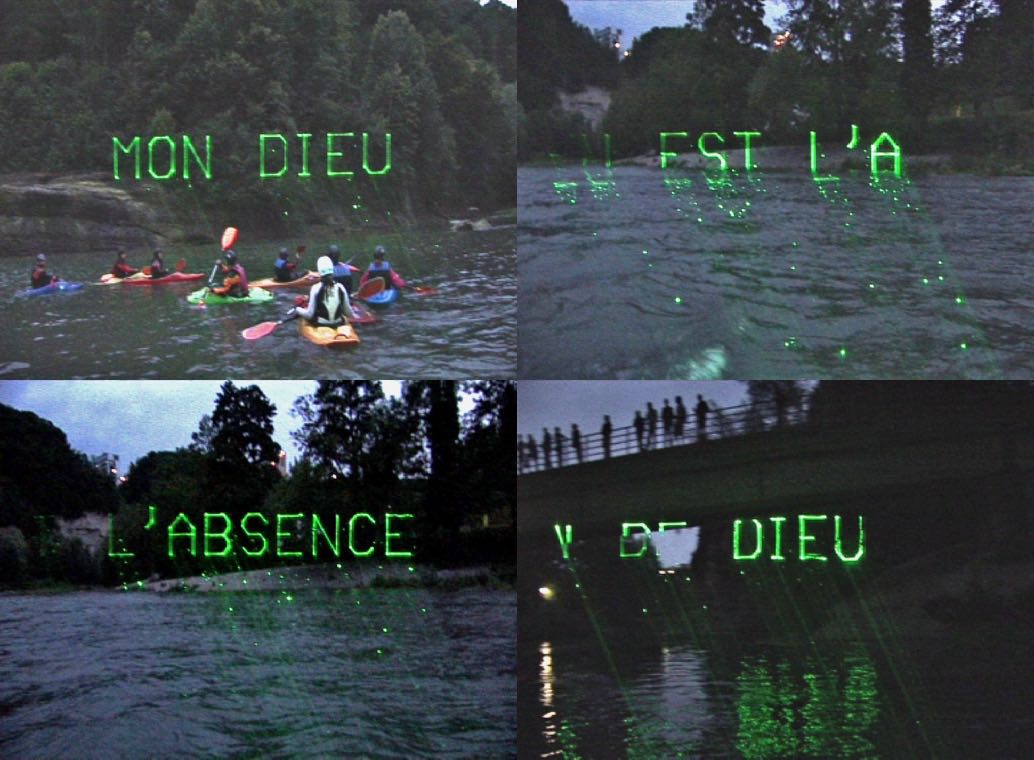
A mobile laser projection performed on the Sarine river in Fribourg, Switzerland, presented as part of Fri-Art Centre d'art contemporain's group exhibition Emotional Landscapes (2007).
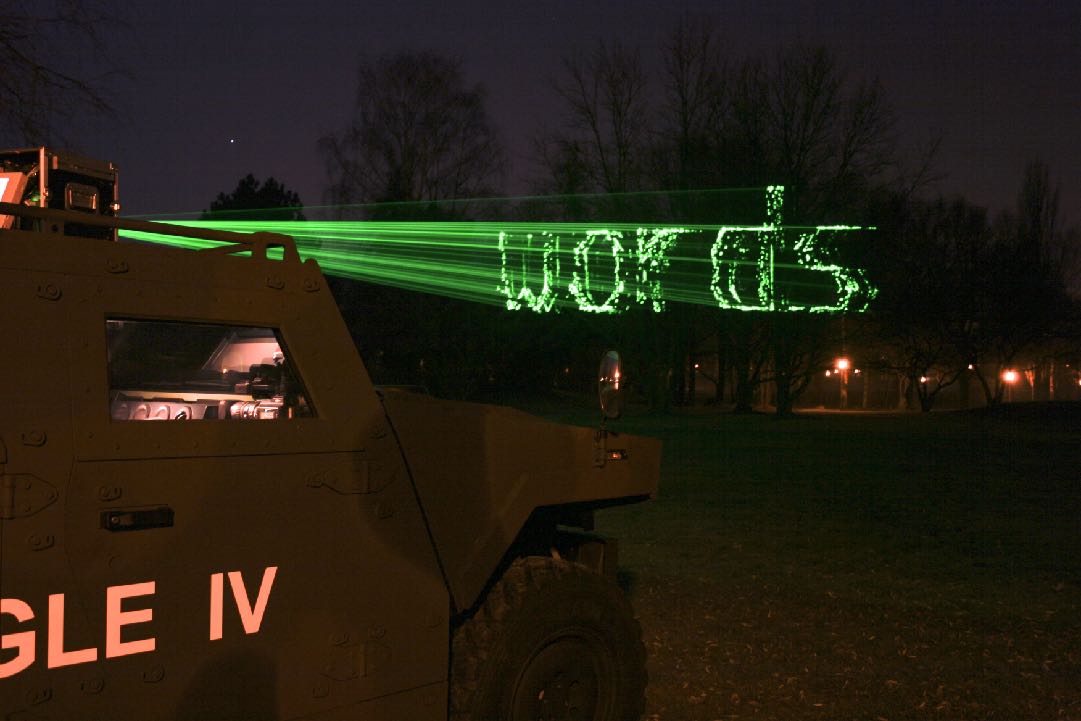
Laser projection of a poem from a military truck, driving through the landscape of Kreuzlingen, Switzerland. Presented at Kunstraum Kreuzlingen (January–February 2006). The work uses military infrastructure as a carrier for poetic language, placing text into public and contested space.
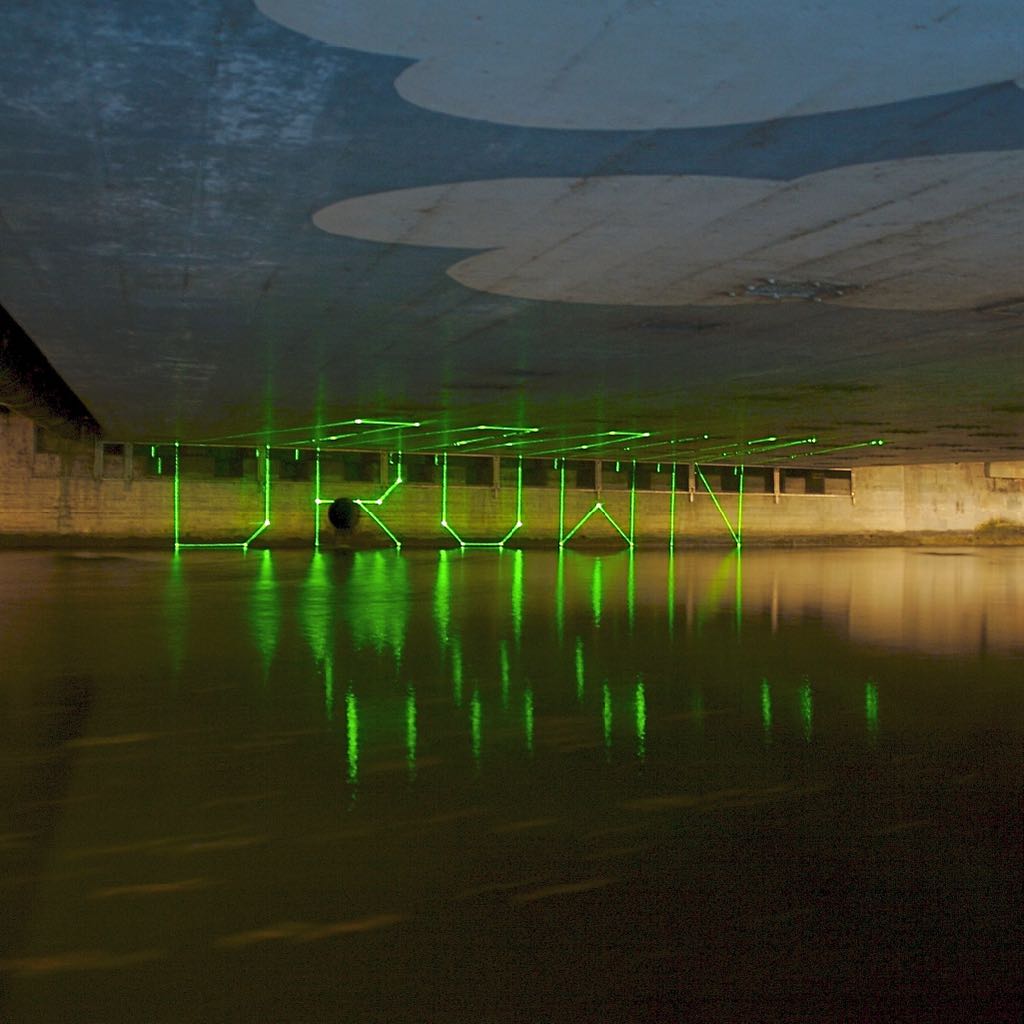
Drown: laser projection of a poem under the Dreikönigsbrücke, Zürich (2006–2007). Migration Manifesto: laser projection at the Swiss–Italian border, Chiasso/Como (2006). Both works use the laser as an instrument for inscribing language onto charged sites — a bridge, a border.
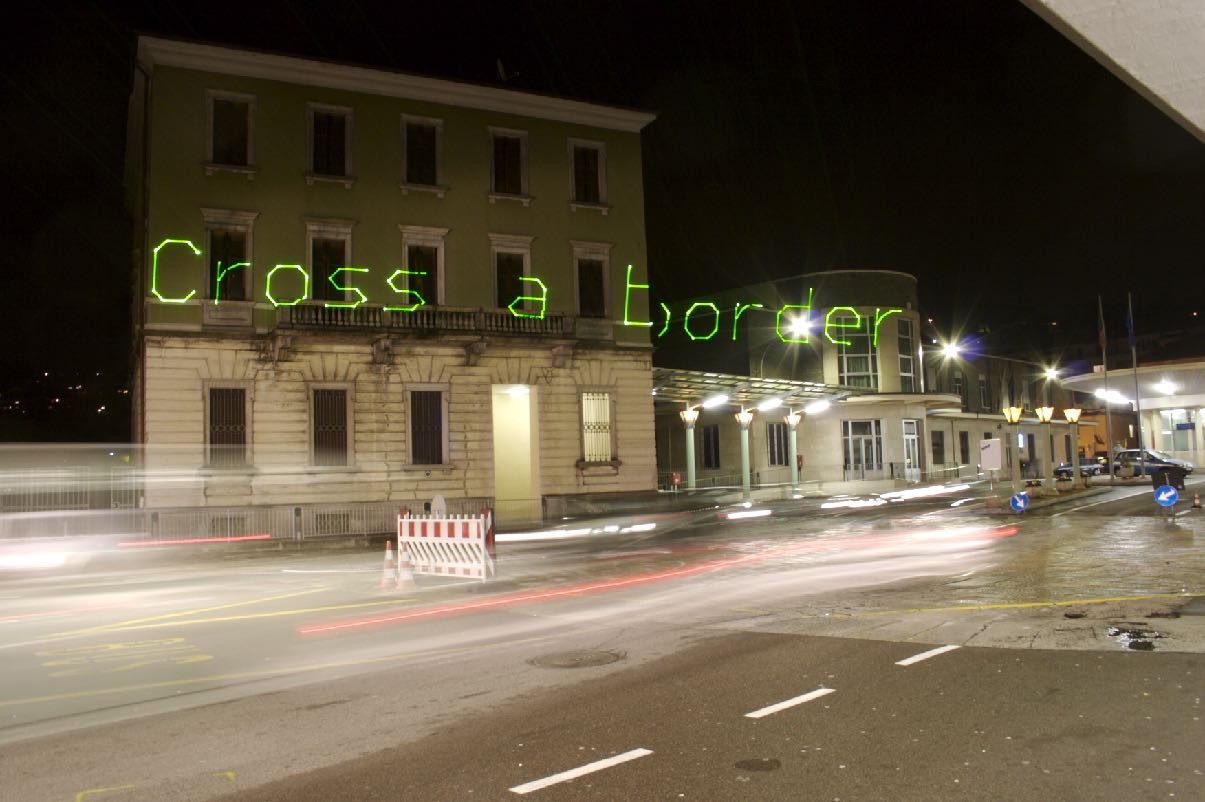
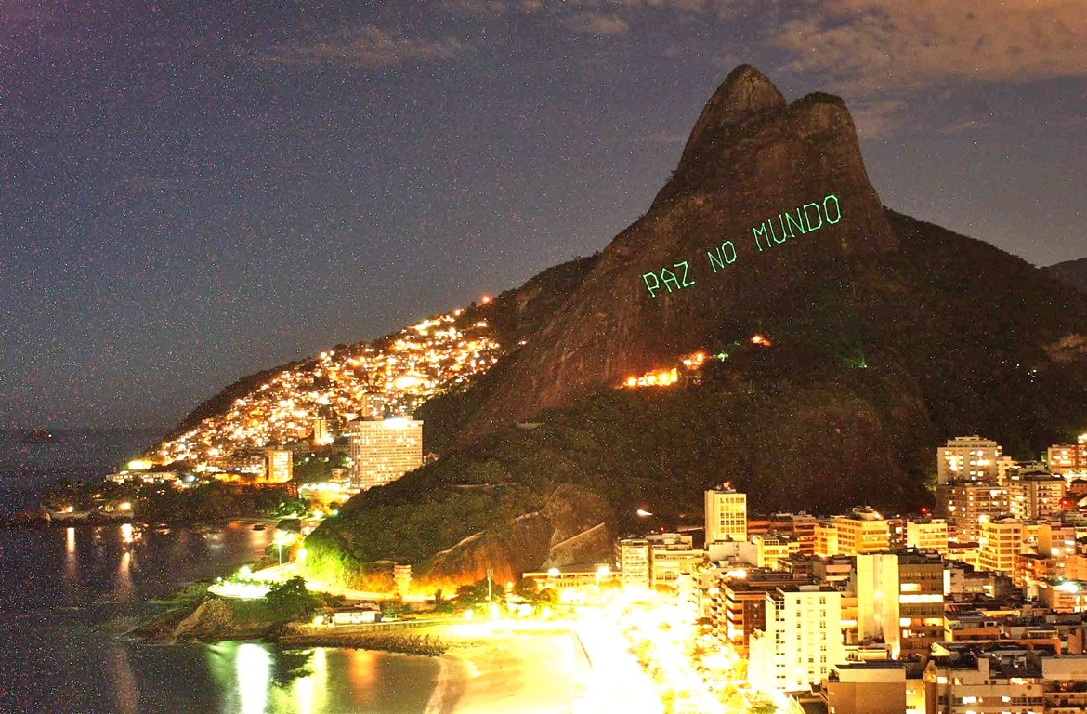
Anyone, anywhere in the world, could send a message via the web — and see it projected in real time onto iconic public sites across four continents. 40,000 messages were received and projected at the United Nations Headquarters in New York, Morro Dois Irmãos in Rio de Janeiro, Mumbai Beach, and Geneva.
The project raised fundamental questions about public space, global connectivity, and who has the right to speak — and where. Covered by the Guardian, Wired, New York Times, NRC Handelsblad, and Sonntagszeitung (all 2003).
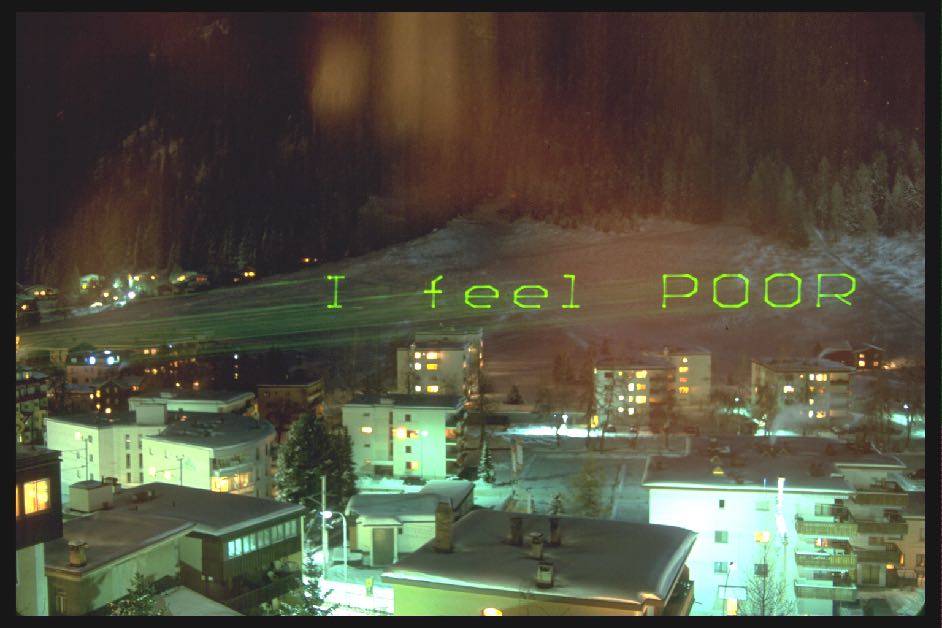
During the World Economic Forum in Davos, Switzerland, anyone could submit a message via the web and have it projected as a laser onto the snow-covered slopes surrounding the conference. 2,500 messages were projected over the course of the WEF — visible to delegates and passersby alike.
The work used the global spectacle of Davos as a stage for unfiltered public voice, inverting the logic of access and exclusion that defines the Forum. It received an Award of Distinction at Transmediale 2002, Berlin, and was covered in the New York Times, Kunstbulletin, and international press.
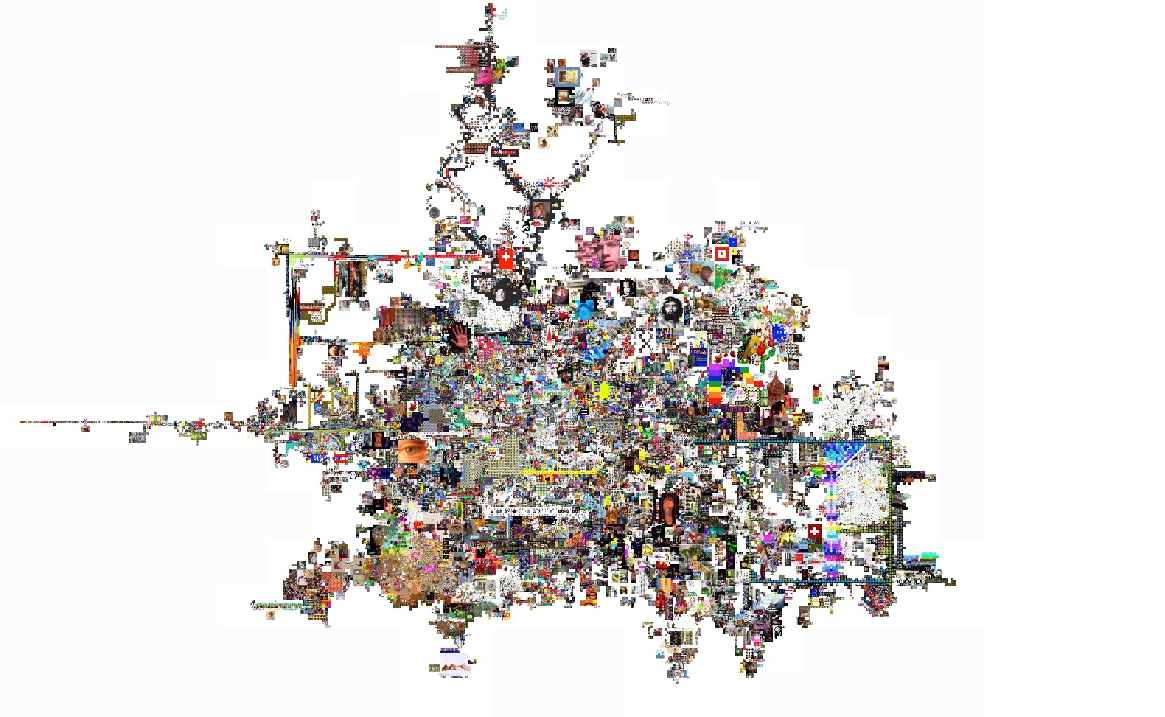
Gees' first major work: a collaborative online project enabling a visual dialogue between thousands of contributors worldwide. communimage.net operates as a collectively authored image — a living work in permanent construction, shaped by anyone who participates. It established the participatory, networked logic that would run through all of Gees' subsequent work.
With Empathy — Songs For The Modern Heart, the artist Johannes Gees returns to his origins. Before he became known for interactive laser projections, conceptual internet art, and blockchain experiments, he was a musician — and it is as a musician that he now resurfaces, with 14 songs on limited vinyl.
Born and raised on the shores of Lake Constance, Switzerland. Citizen of Davos. Lives in Zurich and Biarritz. Studied Social Anthropology and History at the University of Zurich. Started painting at the age of 21. Founded the bands "Sarah Röben" and "Scuba Divers". Played numerous gigs and cut some records.
Gees has worked in digital and physical spaces since 1999, often combining one with the other. His early installations raised questions about who owns public space: in 2001, hellomrpresident invited people worldwide to project laser messages onto the snow-covered slopes of Davos during the World Economic Forum, earning headlines around the world and an Award of Distinction at Transmediale 2002, Berlin.
In 2004, the Hello World Project placed laser projectors at iconic locations — the UN headquarters in New York, Morro Dois Irmãos in Rio de Janeiro, Mumbai Beach, Geneva — allowing anyone to send messages into public space. In 2007 he was summoned to court for "disturbing religious peace" following his public installation Salat.
In 2012 he co-founded wemakeit.com, the crowdfunding platform that became market leader in Switzerland and Austria. In 2019 he produced kleee02, one of the earliest NFT collections of its kind, certified on the Ethereum blockchain on April 10, 2019.
Empathy is not a side project. It is a work — one that fits squarely into a practice defined by conceptual ambition, public provocation, and the hybrid crossing of disciplines. Limited to 200 copies, with paintings by Andreas Dobler.
For press, booking, and exhibition enquiries.